What is "Ex-Dividend"? A Beginner's Guide
Published: January 22, 2026 • Options Basics
Tags: dividend, ex, stocks, investing
What is "Ex-Dividend"? A Beginner's Guide
If you're new to investing in stocks (especially dividend stocks), you've probably seen the term "ex-dividend" or "ex-date" pop up on stock quotes, news, or your broker's app. It sounds technical, but it's actually pretty straightforward once you break it down.
Ex-dividend (often shortened to "ex-div") means the stock is trading without (or "ex") the right to the next upcoming dividend payment.
In simple terms:
If you buy the stock before the ex-dividend date → you get the dividend.
If you buy the stock on or after the ex-dividend date → you don't get the dividend (the seller does instead).
It's the cutoff point that decides who receives the company's cash payout.
Why Does This Date Exist?
Companies pay dividends to shareholders as a reward for owning their stock. But not everyone who trades the stock around dividend time should get it — only those officially on the company's books by a certain point.
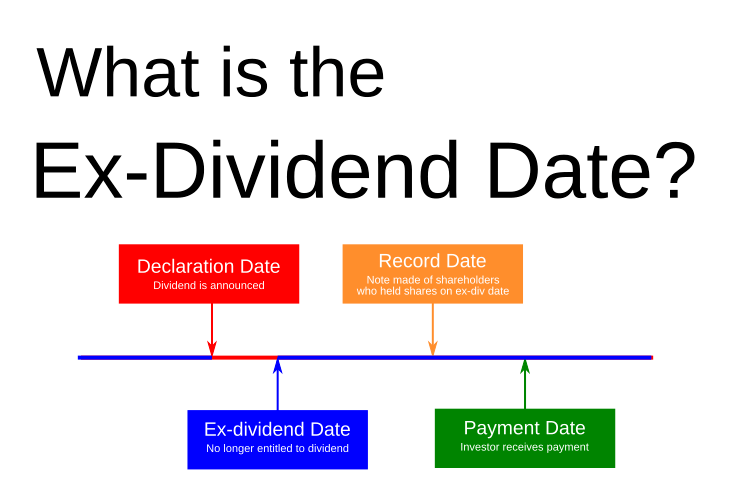
Here's the key timeline (the four main dividend dates):
Declaration Date — Company announces the dividend amount, payment date, etc.
Ex-Dividend Date (ex-date) — The big cutoff we're talking about.
Record Date — Company checks its shareholder list to see who gets the dividend. (Usually 1 business day after the ex-date.)
Payment Date — Actual cash hits your account (weeks later).
The ex-dividend date is typically one business day before the record date (due to how stock trades settle — currently T+1 in many markets).
To qualify for the dividend, you need to own the stock before the ex-date ends. If you buy it on the ex-date, the trade settles too late for you to be on the record date list.
What Happens to the Stock Price on the Ex-Dividend Date?
On the morning of the ex-dividend date, the stock's opening price usually drops by roughly the amount of the dividend (all else equal).
Example:
Stock XYZ trades at $100 per share.
Company declares a $1.00 dividend.
On the ex-dividend date, the price might open around $99 (minus the $1 dividend).
This automatic adjustment keeps things fair — buyers aren't paying full price for a dividend they won't receive.


(These diagrams show how the price typically adjusts downward on the ex-date and the timeline of dividend dates.)
Quick Real-World Tips for Beginners
Want the dividend? Buy the stock at least one day before the ex-date (and hold through it).
Chasing dividends by buying just before the ex-date and selling right after? Be careful — the price drop often wipes out the dividend gain (plus trading fees/taxes). It's rarely a free lunch.
Check ex-dates on sites like Yahoo Finance, your broker, or Dividend.com.
This applies mostly to cash dividends on stocks. ETFs, mutual funds, and other assets have similar rules.
Bottom line: "Ex-dividend" just marks the moment the stock stops carrying the right to the next dividend. Buy before that date → you collect. Buy on/after → you miss out, but the price is adjusted lower to reflect it.
How the Ex-Dividend Date Pertains to Options Trading: A Beginner's Guide
If you've been following along with our options basics (like buying puts without owning stock) and dividends (what "ex-dividend" means), you're probably wondering: How does the ex-dividend date actually affect options?
Great question! Dividends don't just impact stock prices — they influence option pricing, strategy choices, and even early exercise decisions. The key thing to remember: Options contracts themselves are NOT adjusted for dividends (unlike the stock price, which drops on the ex-date). The market prices in the expected dividend effect ahead of time, which creates predictable shifts in call and put values.
Let's break it down simply.
1. The Core Effect: Expected Stock Price Drop on Ex-Dividend Date
On the ex-dividend date, the stock price typically drops by roughly the dividend amount (all else equal). Example: Stock at $100 pays a $1 dividend → opens around $99 on ex-date.
This anticipated drop is already baked into option prices weeks or months in advance (via pricing models like Black-Scholes, which factor in expected dividends).
2. How It Affects Call Options (Bullish Positions)
Calls become cheaper leading up to the ex-date.
Why? The expected stock drop reduces the chance the call finishes in-the-money (ITM), so call premiums are discounted ahead of time.After the ex-date drop happens, calls may lose even more value if the stock falls as expected.
Big risk for call sellers (short calls): If you sold a call and it's deep ITM, the buyer might exercise early (the day before ex-date) to capture the dividend.
Option holders don't get dividends — only stock owners do.
So, if the dividend > remaining time value in a deep ITM American-style call, early exercise makes sense to grab the cash payout.
This leads to early assignment risk for anyone short calls on dividend-paying stocks (especially around ex-dates).
3. How It Affects Put Options (Bearish Positions, Like the Long Puts We Talked About)
Puts become more expensive leading up to the ex-date. Why? The anticipated stock drop increases the chance the put finishes ITM, so put premiums rise to reflect that higher probability.
After the drop occurs, puts gain value (which is great if you're long puts!).
For put sellers (short puts), this can mean higher premiums collected upfront, but more assignment risk if the stock tanks post-drop.
Quick Visual Summary of Pricing Impact (Leading Up to Ex-Date)
Calls: ↓ Premium (cheaper to buy, less valuable to sell)
Puts: ↑ Premium (more expensive to buy, more credit if selling)
On/after ex-date, the adjustment happens in the stock price, and options react accordingly.
4. Early Exercise Around Ex-Dividend: Mostly a Call Thing
Early exercise is rare for options in general (you usually lose time value), but dividends create an exception for deep ITM calls.
Rule of thumb: If dividend amount > remaining extrinsic/time value in the call → optimal to exercise early (day before ex-date) to get the dividend.
This is why short call positions (naked or covered) carry "dividend risk" — you could get assigned unexpectedly and have to deliver shares (potentially owing the dividend if short stock).
Puts? Almost never exercised early for dividends (since exercising a put means selling stock, and you'd miss the dividend anyway).
Beginner Tips When Trading Options on Dividend Stocks
Check upcoming ex-dates (Yahoo Finance, your broker, or sites like Dividend.com) if trading options on stocks like AAPL, MSFT, or high-yield names.
Avoid being short deep ITM calls right before big ex-dates unless you're okay with early assignment.
For long puts (bearish bets): Ex-dates can actually help if you expect a drop — puts get a premium boost beforehand.
Dividends have a smaller effect than volatility changes or time decay, but ignoring them can burn you on assignment or mispriced trades.
In short: The ex-dividend date doesn't change your option contract terms, but the market anticipates the stock's dividend-adjusted drop and reprices calls lower and puts higher ahead of time. This creates opportunities (e.g., higher put value) and risks (e.g., early call assignment).